
Set in Stone
What holds?

Two exhibitions currently on view at David Zwirner — one uptown, one downtown — circle that question in very different ways.
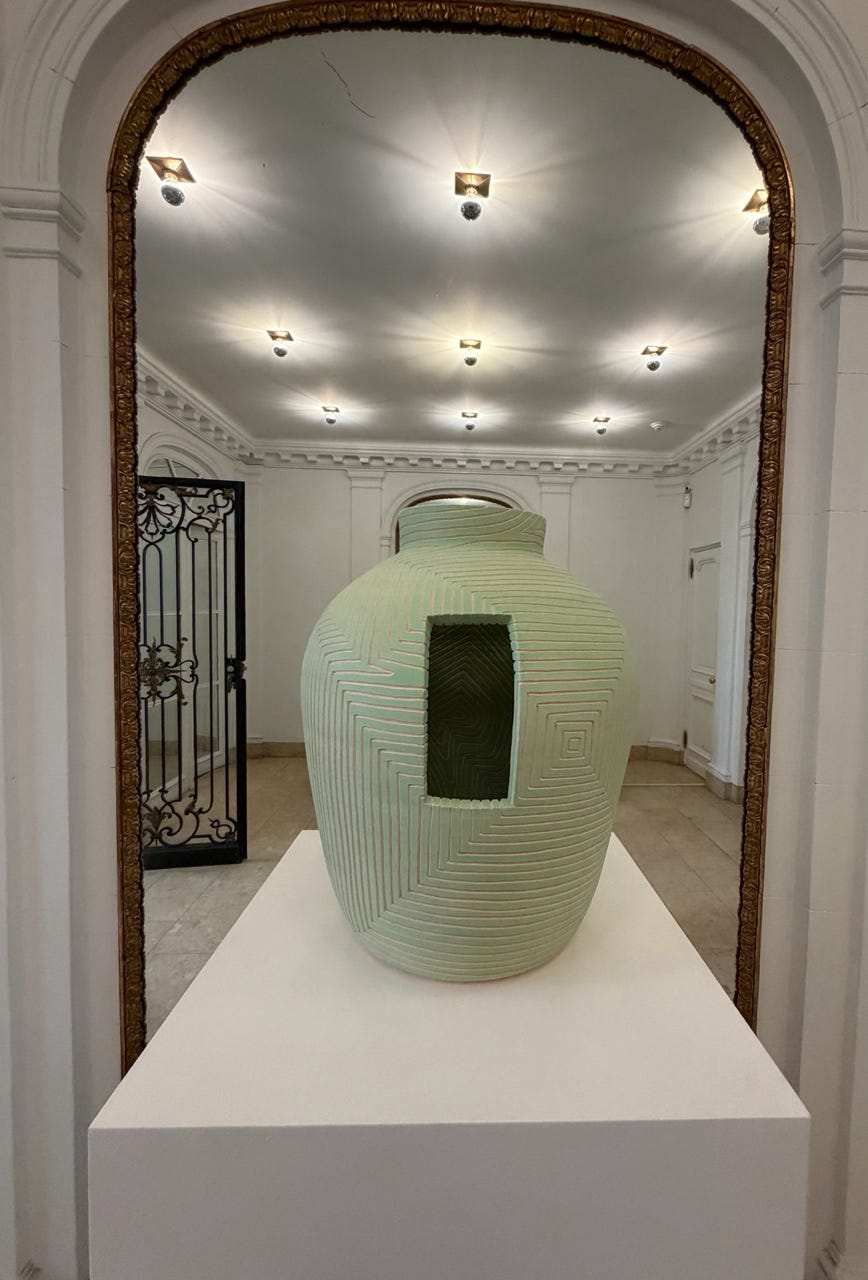
Set in Stone
Shio Kusaka, Window 19, 2026
Set in Stone, organized with Galerie Kugel at Zwirner’s 69th Street townhouse, begins before the exhibition properly begins. In the entry hall, a Shio Kusaka vessel sits before a gilt-framed mirror, the architecture folding back into itself — the building already functioning less as container than participant.
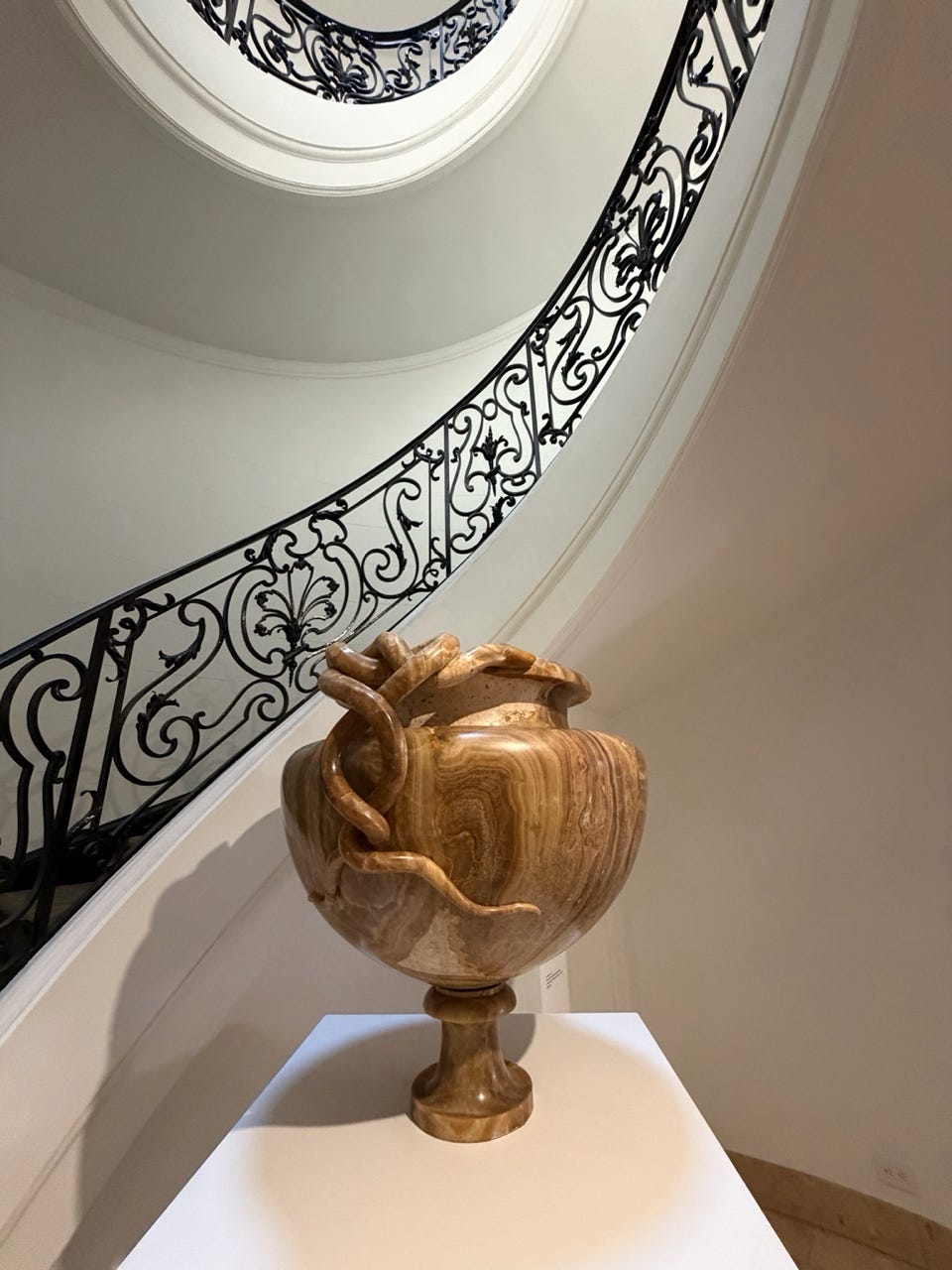
Anonymous, Vase with snake-shaped handles and anthemion elements, Rome, c. 1650, alabaster
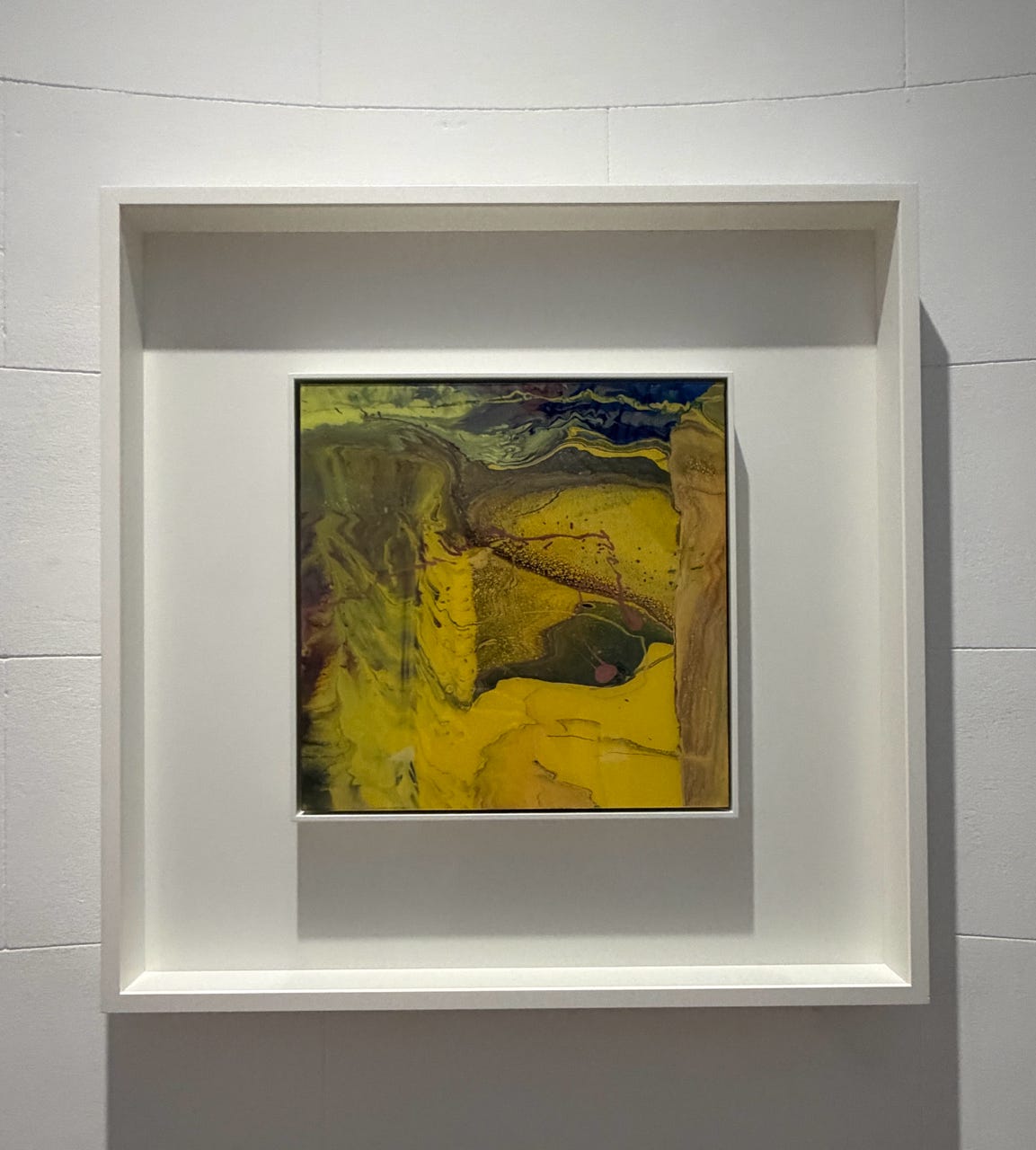
Gerhard Richter, Flow, 2013
Before ascending the staircase, a small Gerhard Richter abstraction hangs adjacent to a sixteenth-century alabaster vessel: two objects, centuries apart, quietly testing what color, translucency, and surface can carry across time.
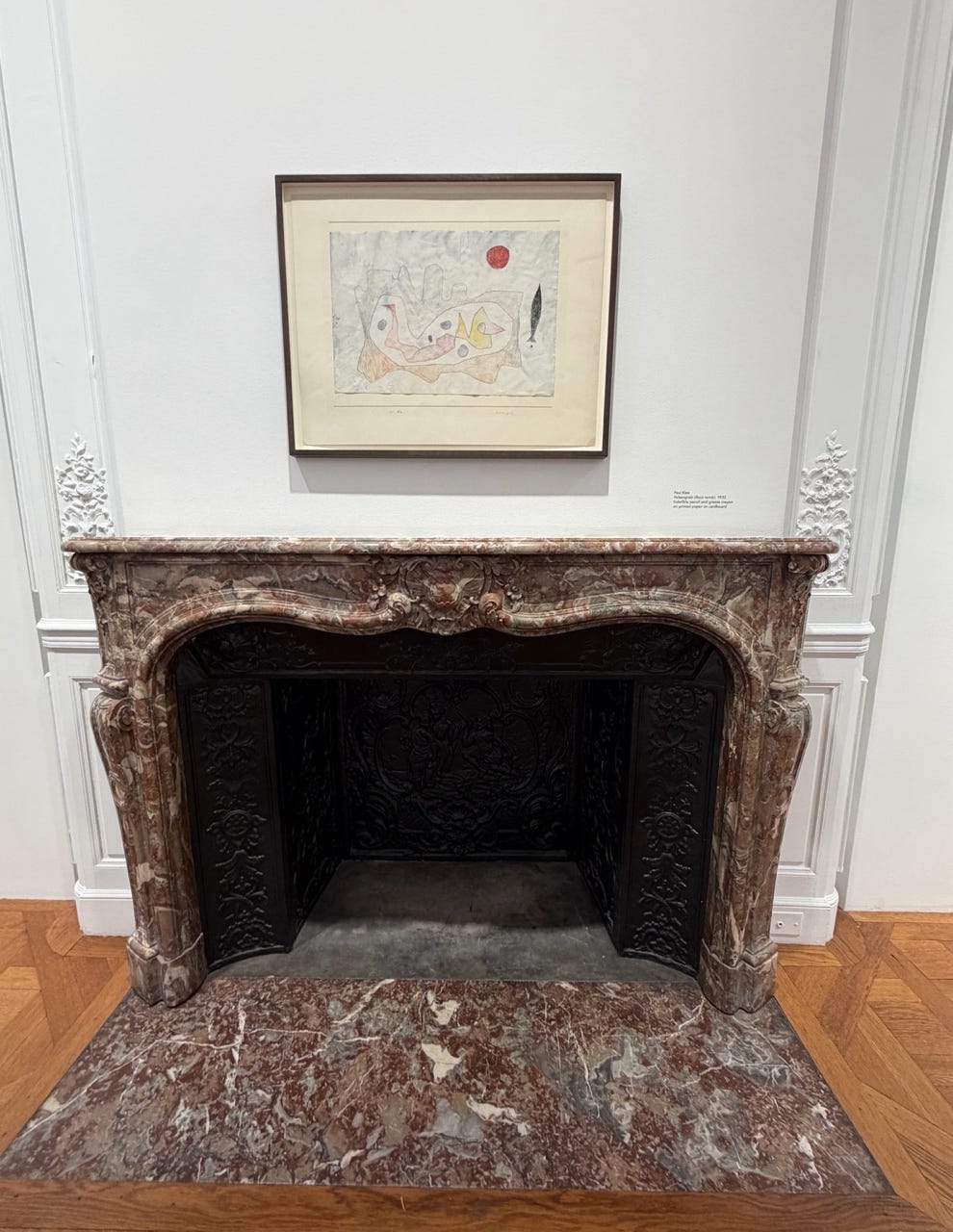
Paul Klee, Felsengrab (Rock Tomb), 1932
The exhibition is organized around ideas of luminosity, translucency, and colorlessness, though what emerges more powerfully is resonance. A Paul Klee drawing hovers above a marble fireplace without feeling imposed upon it.
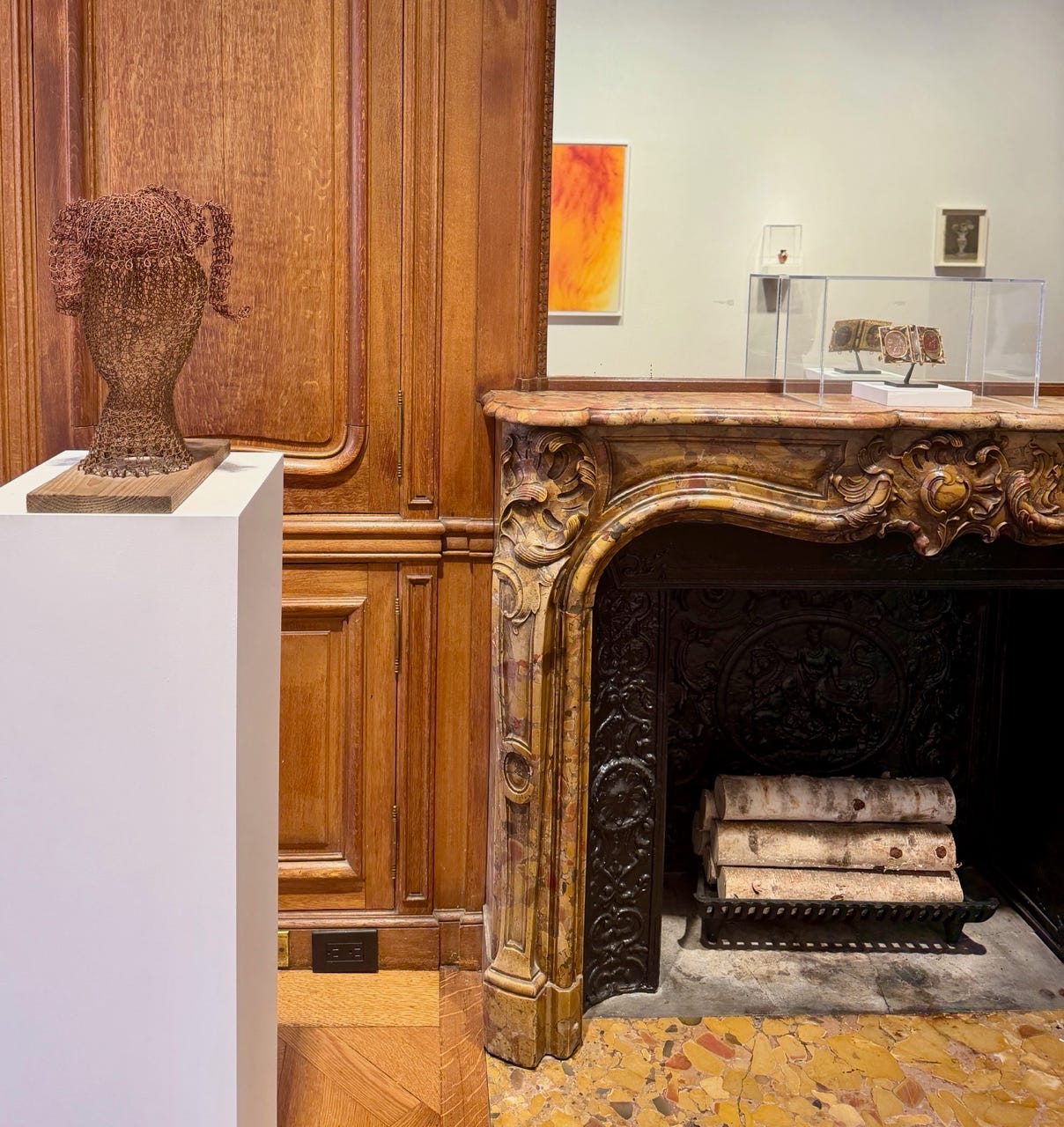
Ruth Asawa, Untitled (Freestanding Portrait of Woman on Wooden Base), c. 1953
Here, Ruth Asawa’s looping wire sculpture reads almost ornamentally, its delicate coils resonating with centuries of carved wood and stone.
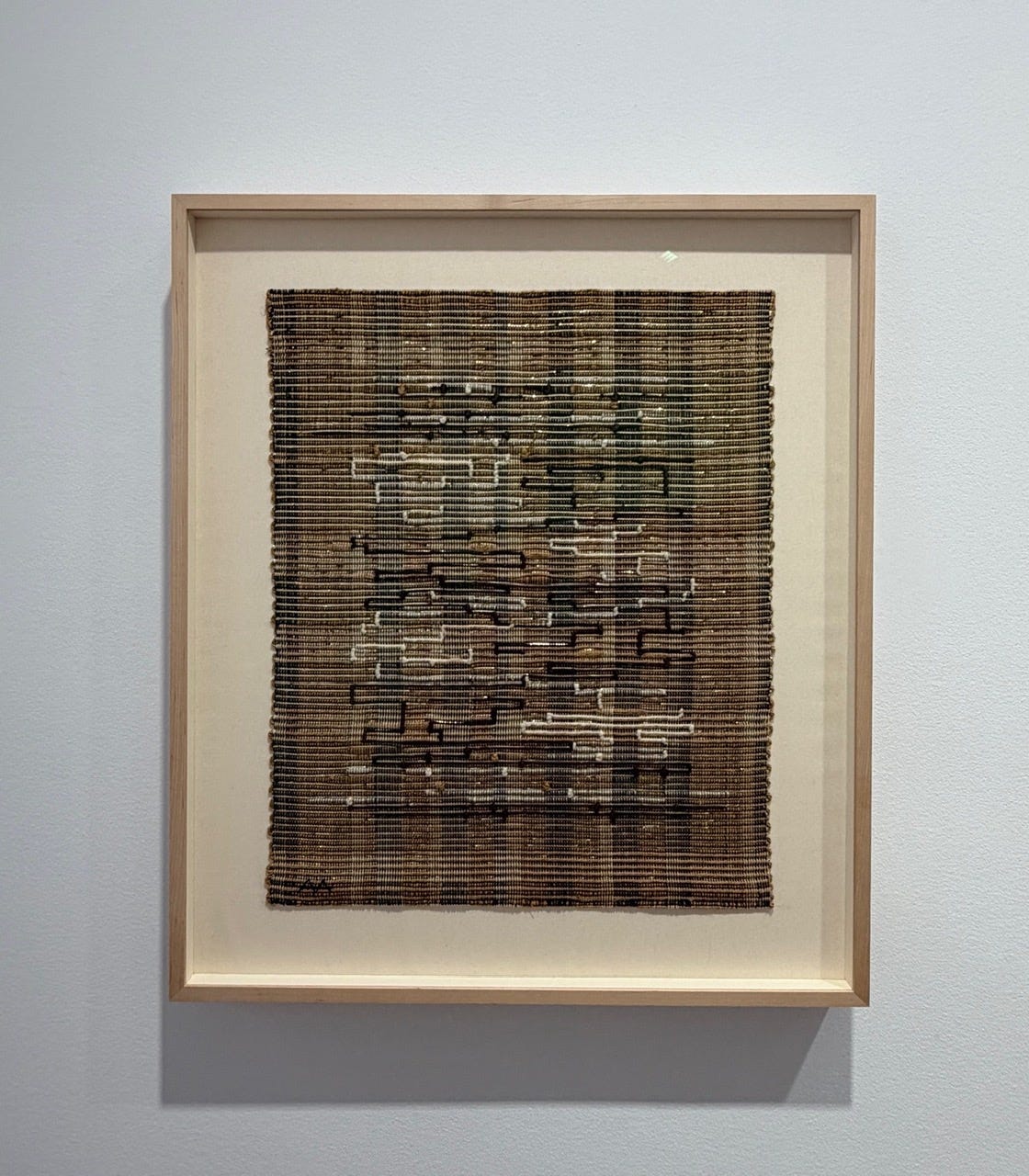
Anni Albers, Black-White-Gold II, 1950
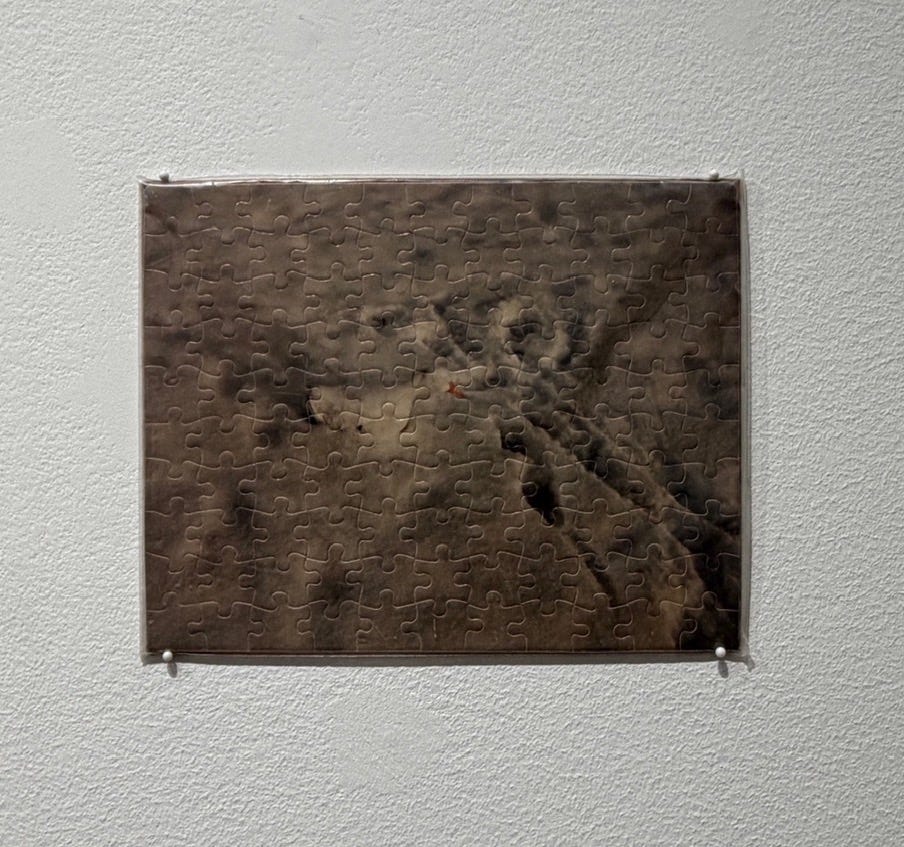
Felix González-Torres, “Untitled” (Cold Blue Snow), 1988
Anni Albers’s weaving echoes the exhibition’s recurring language of veining, fragmentation, and assembled surfaces. Nearby, a Felix González-Torres puzzle piece feels almost excavated.
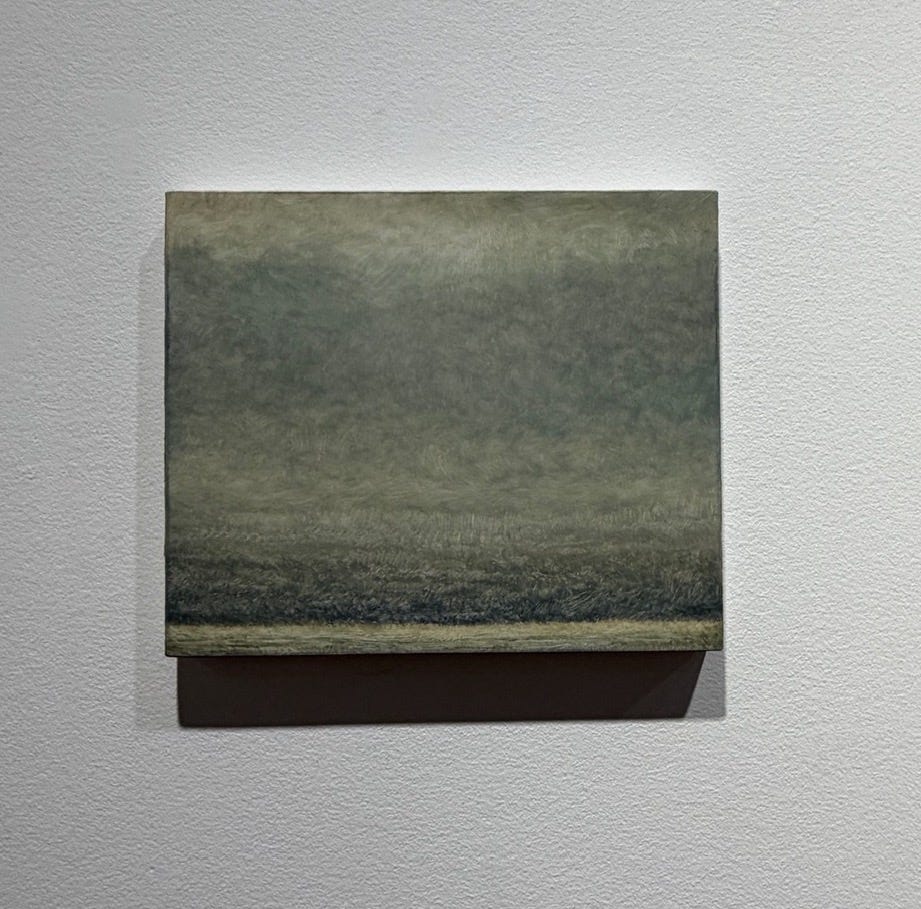
Lucas Arruda, Untitled (from the Deserto-Modelo series), 2025
And then a small Lucas Arruda painting — gray-green, nearly weightless — holding its own against rooms dense with stone, wood, and historical decoration without ever raising its voice. That becomes the exhibition’s quiet test: can an object hold? Not through monumentality or pedigree, but through concentration, attention, presence.
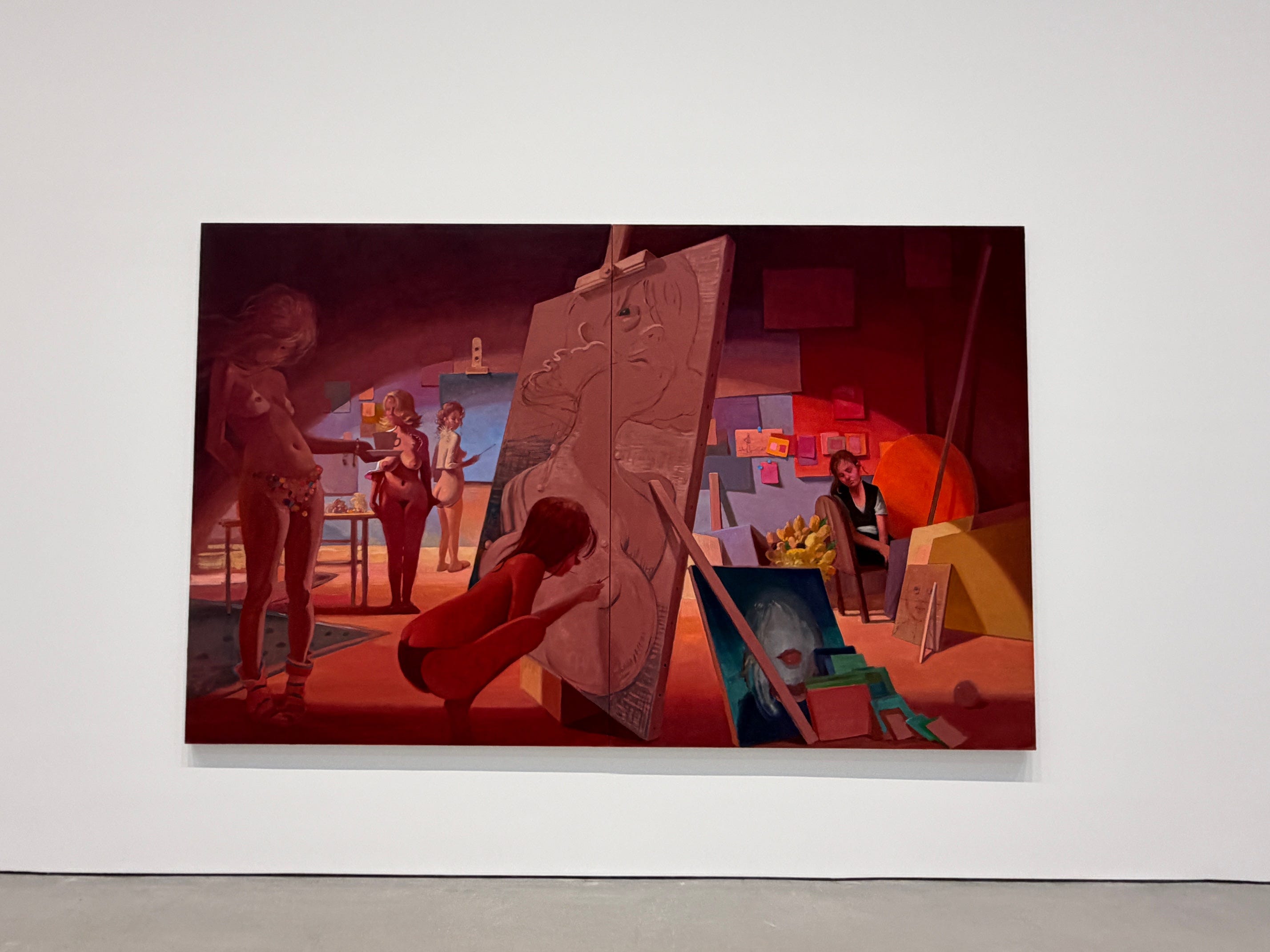
Lisa Yuskavage
The Joy of Painting, 2025
Downtown, Lisa Yuskavage approaches many of these same questions from inside the studio.
Every work in the exhibition is, in some sense, a studio picture: paintings within paintings, mirrors, pin-ups, studies, recurring female figures (bodies as both subject and object), chromatic systems, fragments, frames, and portals. Alongside the paintings, Yuskavage debuts seven new collage works — incorporating paper directly into the logic of construction and illusion.
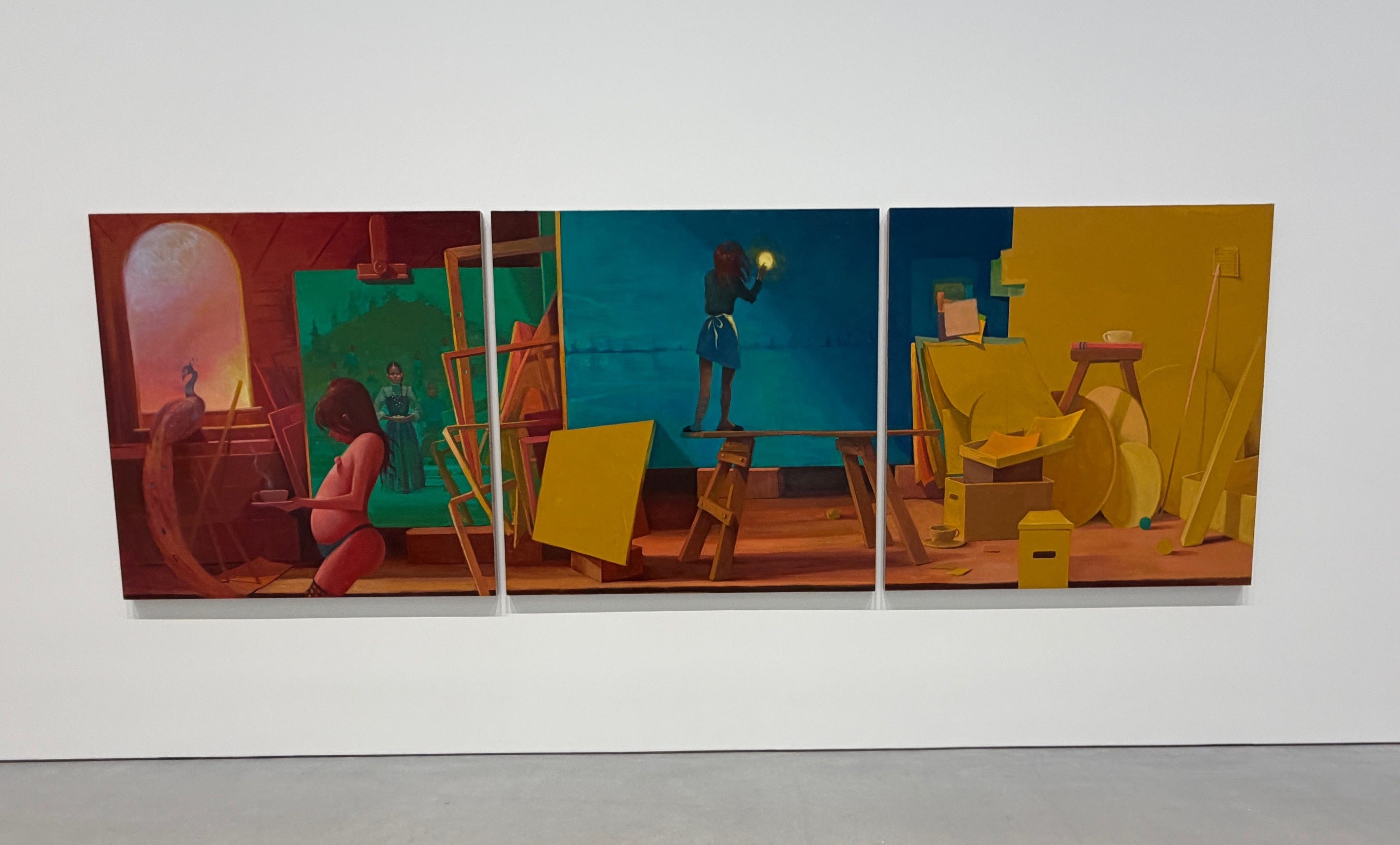
Endless Studio (portal), 2025
Throughout the show, painted depictions of sticky notes, taped paper fragments, reproductions, and stacked canvases evoke Josef Albers’s Homage to the Square and other traces of studio process. But in the new collage works, Yuskavage pushes trompe l’œil into something more unstable: painted works on paper, reproduced images, and actual collage elements collapse into one another.
In Legend: Red Yellow Blue, the female body appears almost as though it has been run through a printer’s color-correction process — flesh separated into chromatic systems while remaining insistently painterly.
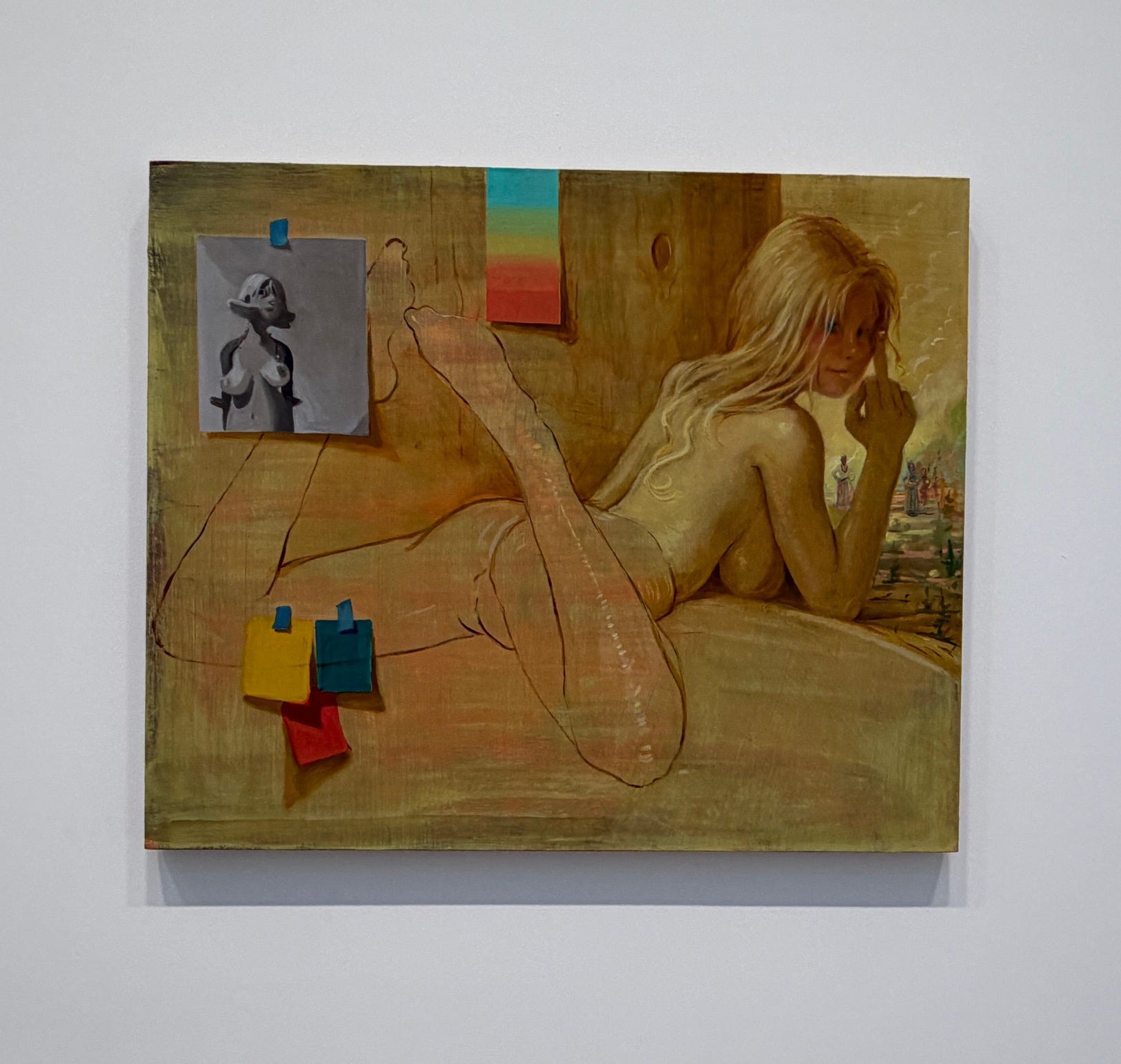
Legend: Red Yellow Blue, 2024–25
The exhibition also recalls Las Meninas less through direct quotation than through its spatial and psychological complexity. Paintings open onto other paintings, figures drift between observation and performance, and the studio becomes a recursive space where portraiture, perspective, spectatorship, and painting itself are continually examined.
One of the exhibition’s central works, the monumental triptych Endless Studio (portal), expands this dialogue only to further destabilize the picture plane. Easels, frames, tables, and perspectival lines drift across subtly separated canvases, fracturing and reassembling so that the painting registers simultaneously as illusionistic image and constructed object.
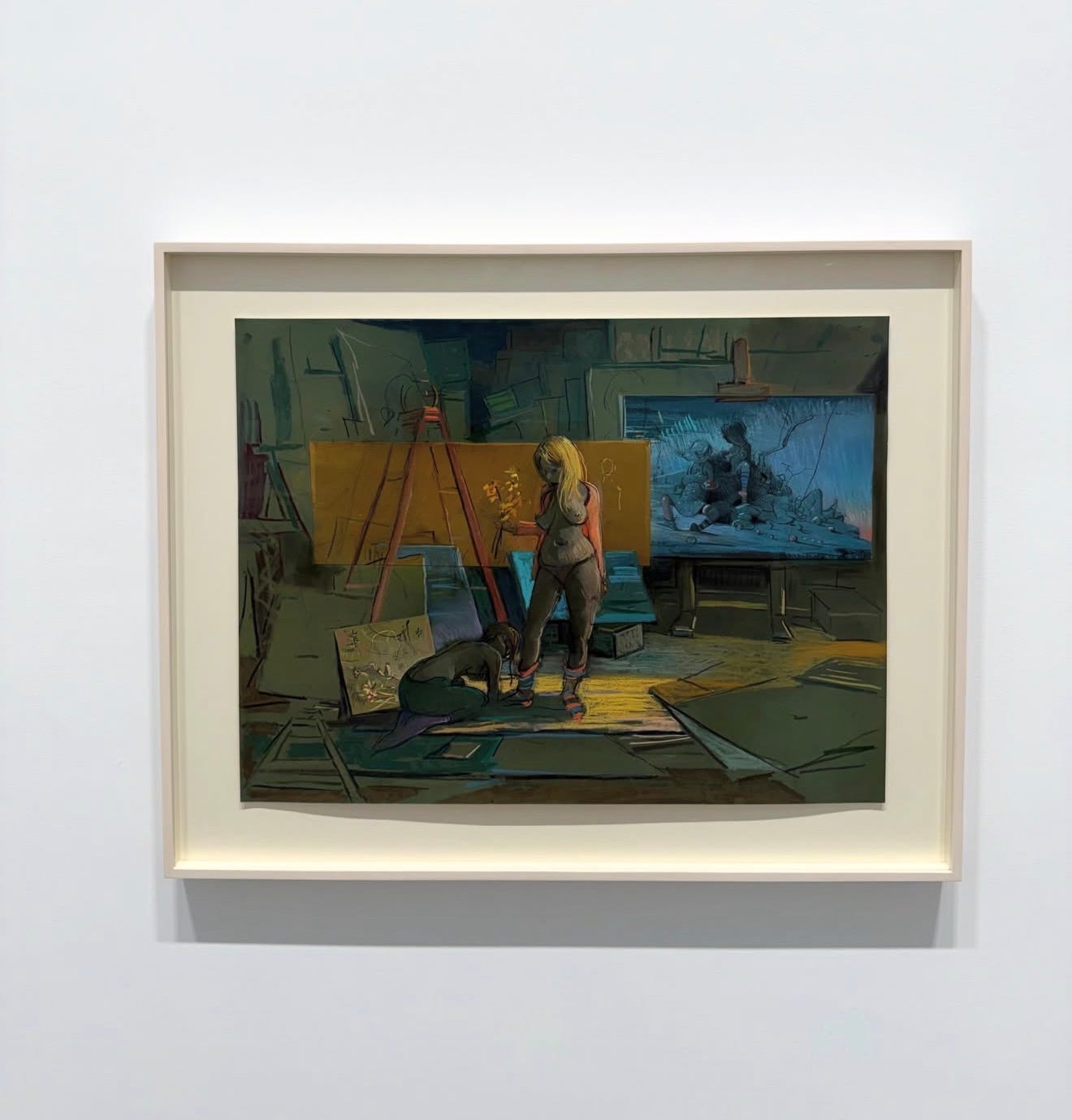
Night Classes in Color Theory, Lesson One: Green IV, 2026
pastel, egg tempera, gouache, and collage on Color-aid paper
Elsewhere, paintings, props, motifs, and female figures migrate across canvases at wildly different scales — micro to macro, intimate to monumental — with astonishing fluidity and control.
What links both exhibitions, finally, is an attention to how images and objects hold meaning across time: through reflection, repetition, material, memory, and sustained looking. Set in stone, perhaps not. But continually reconstructed through surface, color, and form.
For outside the picture plane: tunes for moving through time, space, material, and memory.
PLAYLIST