
Kiss Point

This week began with a playlist.
Kiss Point — from Prince to Leonard Cohen, contact to reckoning — names something I kept running into across three shows: the place where things meet. Where old presses against new. Where a body ends and fabric begins.
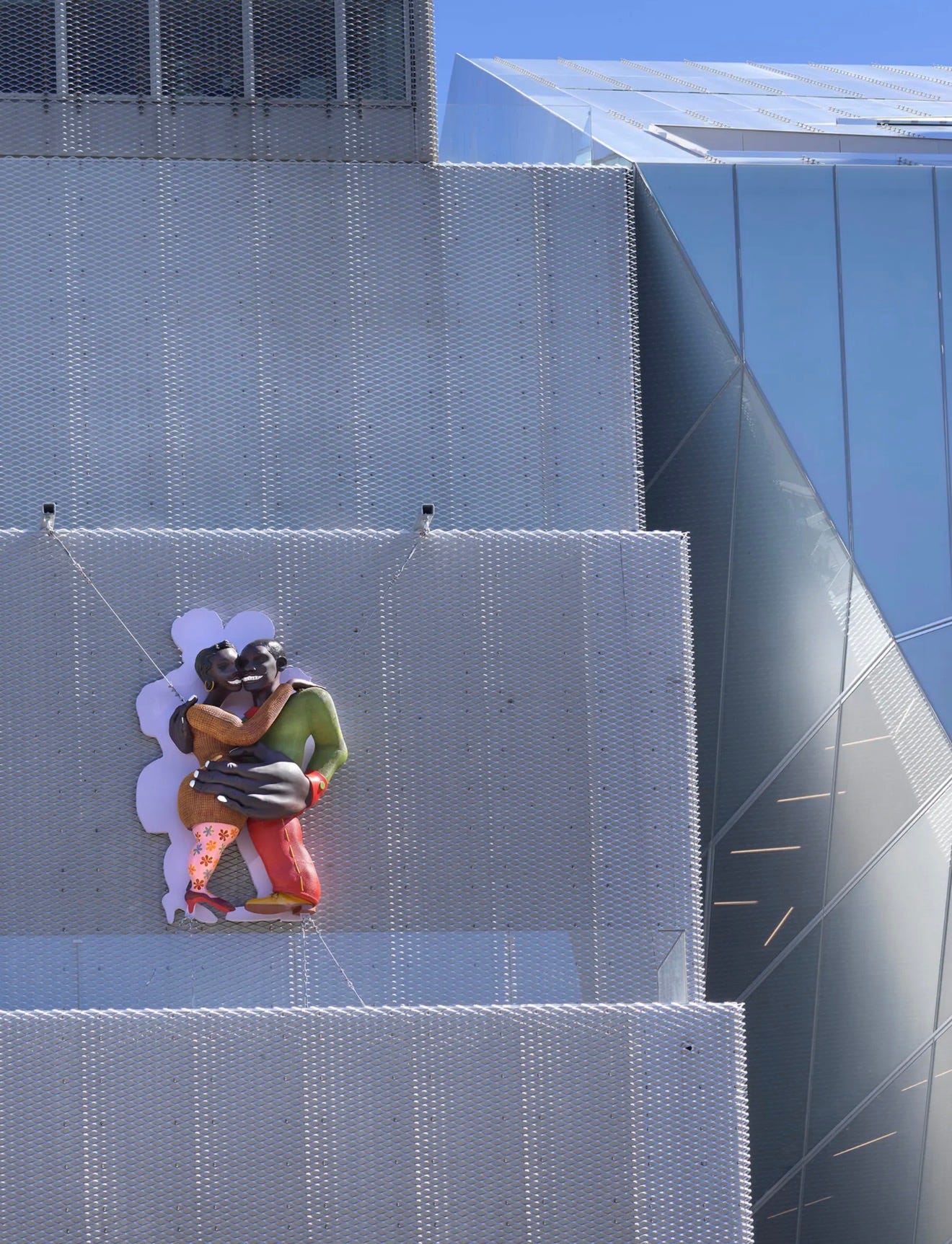
Tschabalala Self, “Art Lovers,” New Museum facade.
At the New Museum, which reopened last week with its new Rem Koolhaas building, Tschabalala Self’s Art Lovers sits exactly at the seam — where the original structure meets the addition. Two figures, locked in embrace, placed precisely at that join. Holding it together, or marking it.
A literal kiss point.
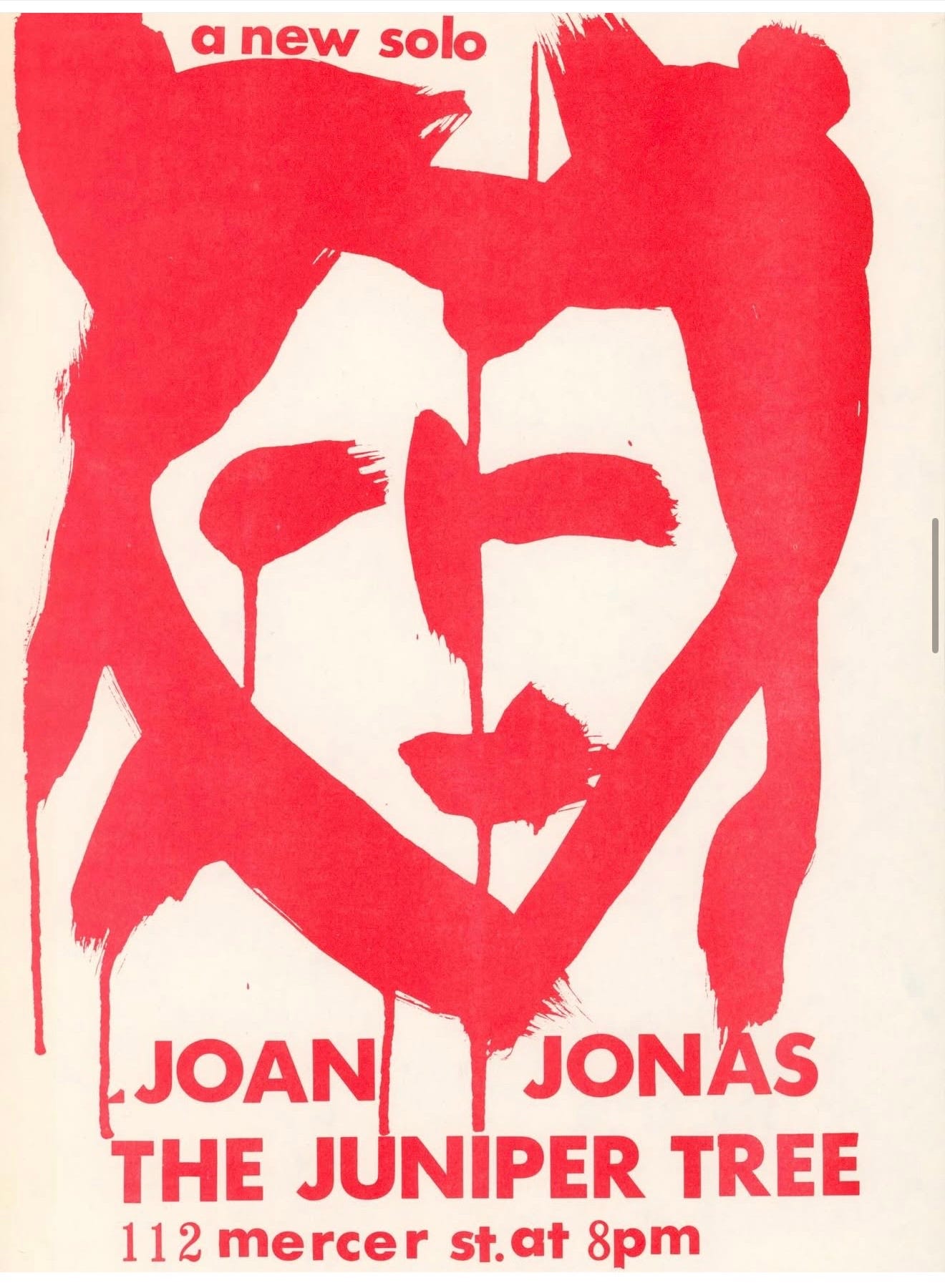
Joan Jonas, “The Juniper Tree,” original poster, 1976. Presented at Danspace Project, March 26–28.
At Danspace, I attended an open dress rehearsal earlier this week for The Juniper Tree. Jonas presents a new iteration of a work she has returned to over decades. Not restaged — reworked.
Fragments of a Grimm tale — images, gestures, voices — repeated, displaced, re-formed. Figures shift: boy, bird, body. They appear and reappear through projection, drawing, sound. The story doesn’t progress. It insists.
In both: the past isn’t backdrop. It’s structural.
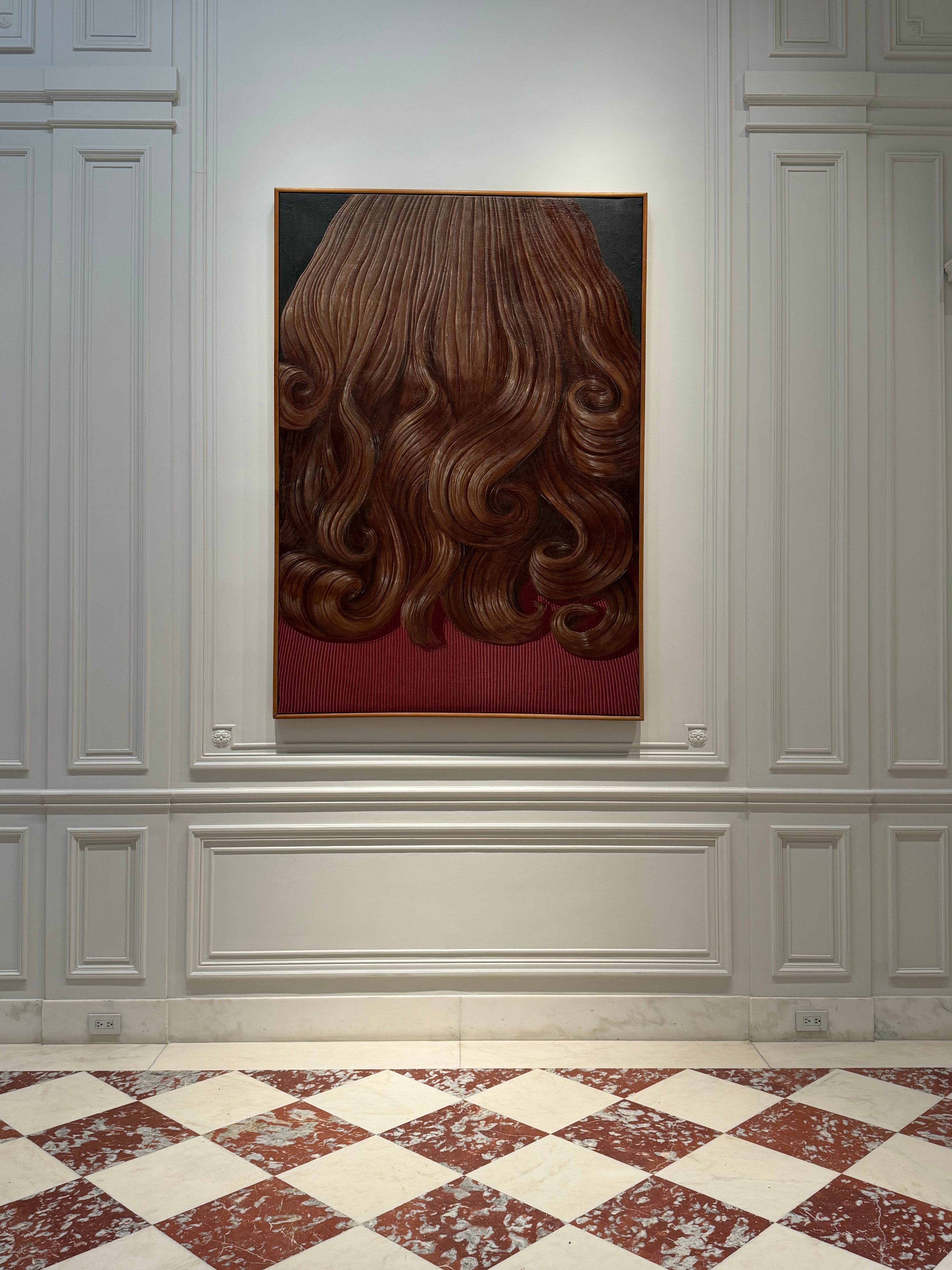
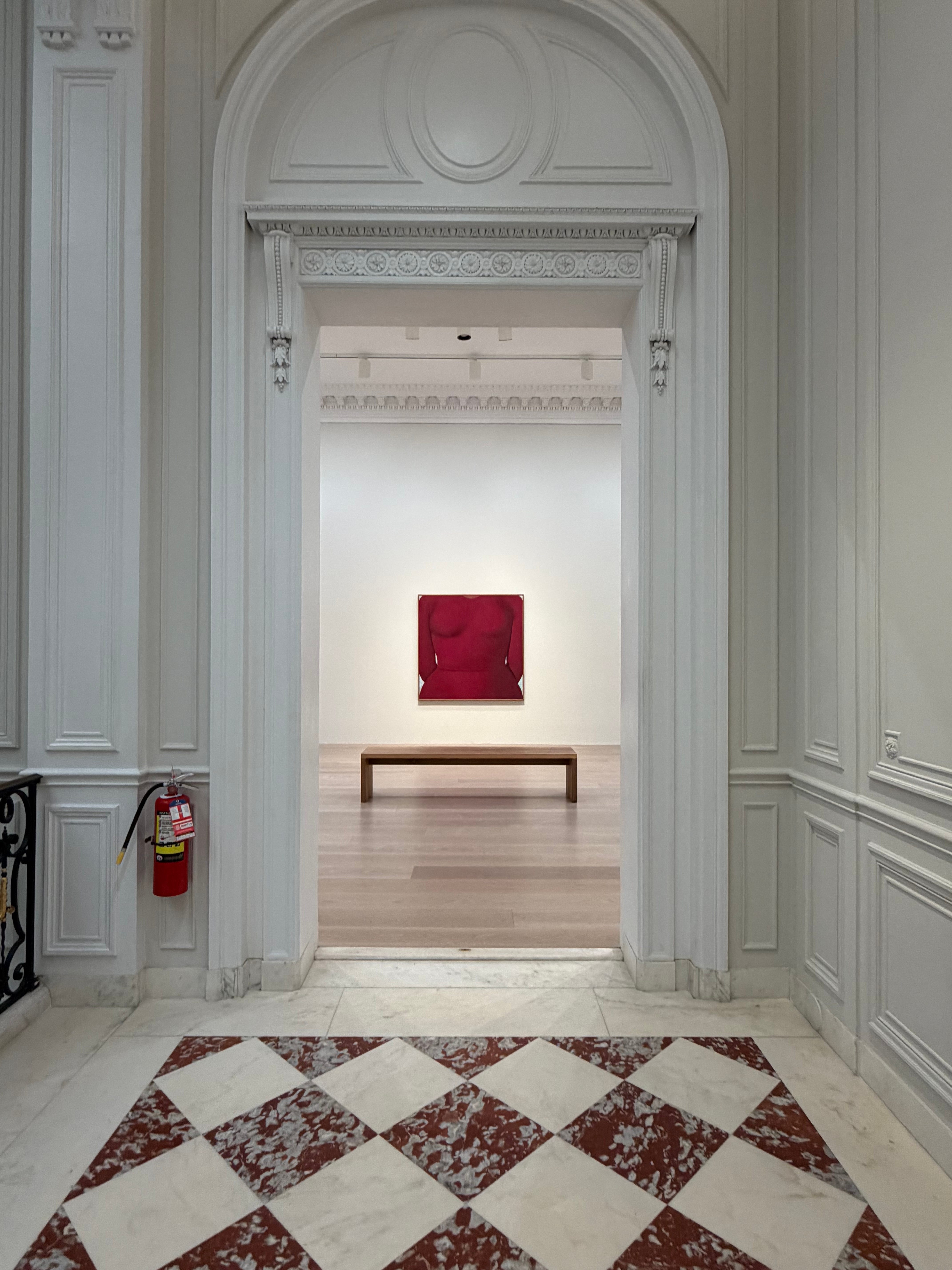
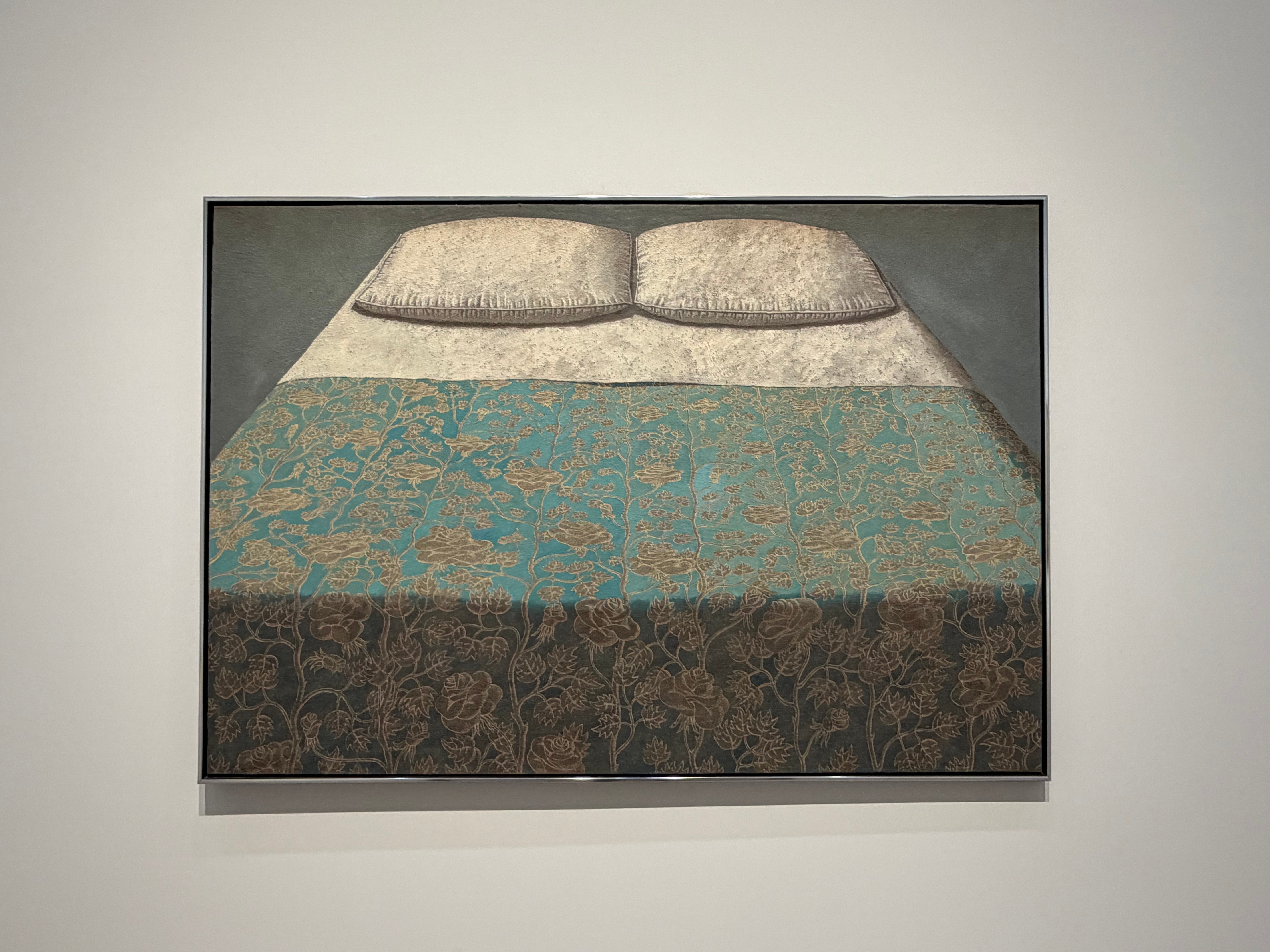
Hair, body, bed. Domenico Gnoli: The Adventure of Domenico Gnoli, Lévy Gorvy Dayan.
Uptown, at Lévy Gorvy Dayan, The Adventure of Domenico Gnoli — the largest showing of his work in the US in over fifty years — makes the seam its entire subject.
Gnoli (1933–1970) painted clothing, hair, beds: ordinary things enlarged until they become something else entirely. A pinstriped trouser waist, cropped below the belt, fills the canvas edge to edge. A floral coverlet, nothing beneath it. A cascade of auburn hair swallowing a shoulder, a glimpse of red ribbed knit.
The body is always present and never there.
The works, from the 1960s, feel utterly contemporary — more so, perhaps. Gnoli mixed sand into his pigments; the surfaces are encrusted, tactile, insistent. In the gilded Upper East Side galleries of the former Wildenstein mansion on East 64th Street, against marble diamond-pattern floors, they read as both glamorous and forensic.
What is being examined? What has left the room?
Gnoli died at 36, four months after his first New York solo exhibition. Only several dozen paintings exist.
Don’t miss it.